It’s 11pm. You opened your phone to check one thing, and forty minutes later you’re deep in a feed of news that makes you feel worse with every swipe. You know you should stop. You keep going. That’s doomscrolling — and the reason “just stop” doesn’t work is that you’re not the only one deciding when the session ends.
The word gets used loosely, so start with what it actually is: compulsively scrolling through negative or distressing content long past the point of it being useful. Not reading the news. Not staying informed. The part where you keep going after it stopped telling you anything new.
Why your brain does this
Two things meet, and they were never a fair fight.
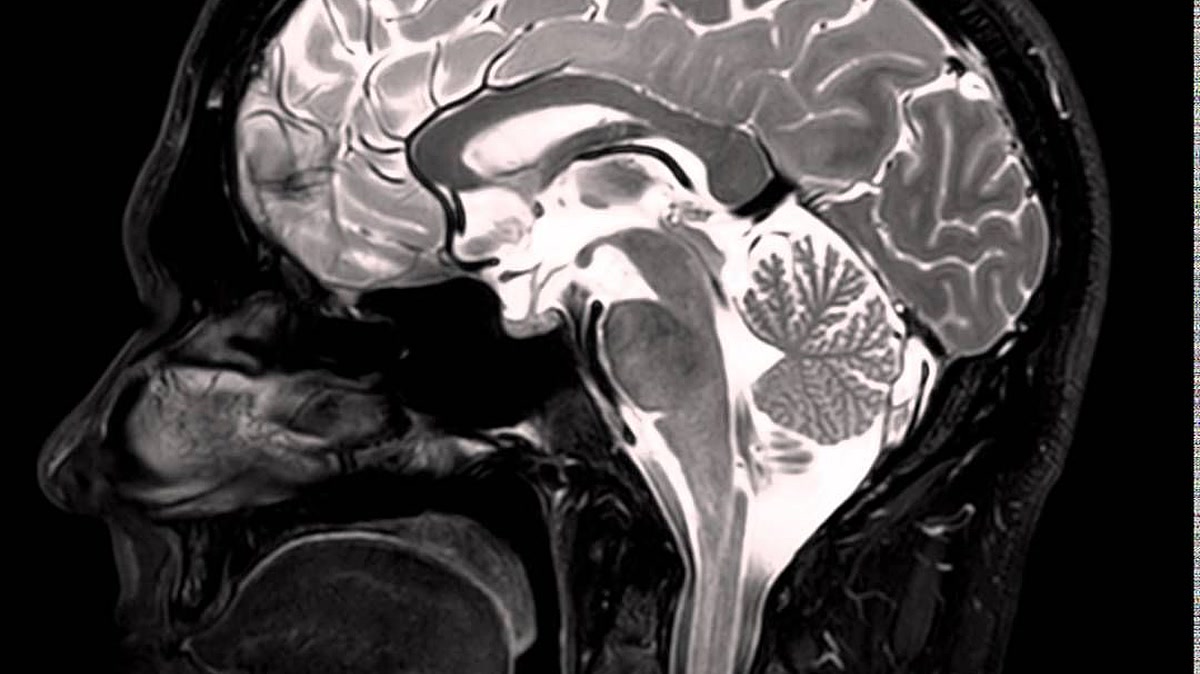
The first is negativity bias — the well-documented human tendency to weight threatening information more heavily than reassuring information. For most of our history, missing a threat cost far more than missing good news. A feed of alarming headlines reads to an older part of your brain as urgent information about danger, which is precisely the thing it's built not to look away from.
The second is the feed itself. Infinite scroll removes every natural stopping point: there's no last page, no end of the paper, nothing that says you're done. And because what appears next is unpredictable — sometimes trivial, occasionally shocking — each swipe carries a variable reward. That intermittent payoff is the most reliable pattern known for producing repetitive behaviour. Your screen time isn't your fault: the surface is designed so that stopping is a decision you have to make, over and over, against a system that never gets tired.
Key takeaways
- Doomscrolling = compulsively consuming distressing content well past the point of usefulness.
- It combines negativity bias (threats hold attention) with infinite feeds that remove every stopping point.
- Willpower loses because you re-decide to stop on every swipe, and the feed never tires.
- What works is removing the choice in advance, not winning it in the moment.
What actually works
- Give the session an ending the app doesn't control. The core problem is that the feed has no end, so supply one from outside it — a timer in another room, a scheduled block, a physical switch. Anything but "I'll stop when I feel like it."
- Put distance between you and the device. Not "put the phone down" — put it somewhere that costs you a walk. Distance turns an automatic reach into a decision you'd have to make deliberately.
- Break the entry point. Most doomscrolls start with an unrelated unlock: you check the time, and twenty minutes later you're in the feed. Remove the app from your home screen, log out, or block it outright so the reflex has nowhere to land.
- Get information on purpose, not on tap. Read the news once a day, from a source with an end — an article, a newsletter, a paper. You stay informed; you skip the infinite part.
- Replace the slot, don't just empty it. The late-night scroll usually fills a real need: to decompress. Give that need somewhere else to go, or the reach comes back.
The honest part
Every technique above works exactly as well as it is hard to reverse. A limit you can dismiss with two taps is a suggestion — and at 11pm, tired, you will dismiss it.
That's the flaw in solving a phone problem with a phone setting: the off switch and the temptation share a screen. Screen-time limits, focus modes and app timers all fail the same way — not because the idea is wrong, but because the escape hatch is always within reach. The friction is the whole point.
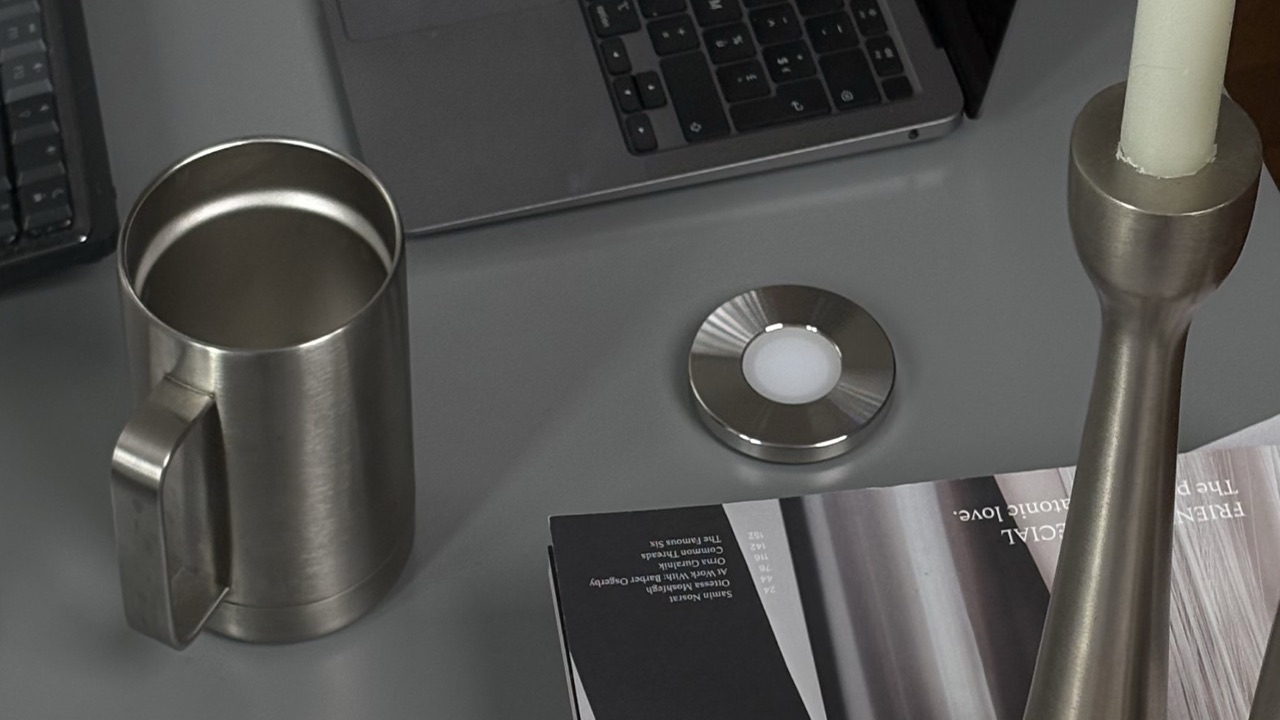
Norma moves that switch off the screen entirely. It's a steel disc: you scan it with your iPhone and the apps you chose — the feeds, the news, whatever pulls you at midnight — go quiet, and stay quiet until you physically scan the disc again. Leave it in another room and the decision is already made. Here's how it works, and what to do about the deeper habit.
End the scroll before it starts.
Scan a steel disc and the feeds go quiet — until you scan again. No timer to dismiss, no off switch on the same screen.
Questions, answered.
- What is doomscrolling?
- Compulsively scrolling through negative or distressing content — usually news or social feeds — long past the point where it’s telling you anything useful. The distinguishing feature isn’t the topic, it’s that you keep going when you meant to stop.
- Why do I keep doomscrolling even when it makes me feel bad?
- Two forces stack up: negativity bias makes threatening information hard to look away from, and infinite feeds remove every natural stopping point while making each swipe an unpredictable reward. Feeling bad doesn’t end the loop, because the loop isn’t driven by enjoyment.
- How do I stop doomscrolling at night?
- Give the session an ending the app doesn’t control, and put the phone somewhere that costs you a walk. Charging it outside the bedroom removes the reach entirely — far more reliable than deciding to stop while you’re already scrolling.
- Is doomscrolling actually bad for you?
- Consuming a steady stream of distressing content is consistently linked with worse mood, higher anxiety and poorer sleep — especially at night. Staying informed isn’t the problem; the endless, unbounded version is.
- Do screen-time limits stop doomscrolling?
- Only while you let them. App timers and focus modes sit on the same device as the feed, so dismissing them takes two taps at the exact moment you’re least likely to resist. They help as a speed bump, not as a wall.
- What’s the difference between doomscrolling and infinite scrolling?
- Infinite scrolling is the mechanic — a feed with no end. Doomscrolling is what that mechanic produces when the content is distressing: you keep consuming bad news because there’s never a point at which the page says you’re finished.
Sources